

The Journal · Experience
Planning a Corporate Retreat in Koh Samui
Most of the corporate retreats we run on Koh Samui start with the same email. Somebody senior has promised the team a trip, the dates are roughly agreed, and nobody has yet worked out how twenty people get from three offices to one villa on an island with a small airport. That part is our job, and it is where most of the planning goes.
This is how we put an offsite together here: the house, the flights, the calendar and the shape of the days. It is written for the person holding the brief, usually an executive assistant, a head of people or a founder who wants it done well. Our Corporate House runs these from the first email to the last airport run.
Why Samui works for a working trip
Samui is big enough to have everything a company needs and small enough that nothing is far away. The airport sits a couple of kilometres north of Chaweng, and most of the houses we use are twenty to forty minutes from the runway. Nobody loses a morning to a transfer.
The island also has the right kind of houses. There is a deep stock of large staffed villas on the hillsides of the north-east and along the west coast, with living rooms big enough to seat a team and terraces where a session can run in the shade. Staff, kitchens and drivers are already part of how these houses operate.
And there is enough to do between sessions without anyone having to organise it themselves: a boat into Ang Thong marine park, a long lunch on Koh Phangan, a spa afternoon, a private chef at night. Our insider's guide to Koh Samui covers the wider island we build these trips around.
Villa or resort
This is the first decision, and it shapes everything after it.
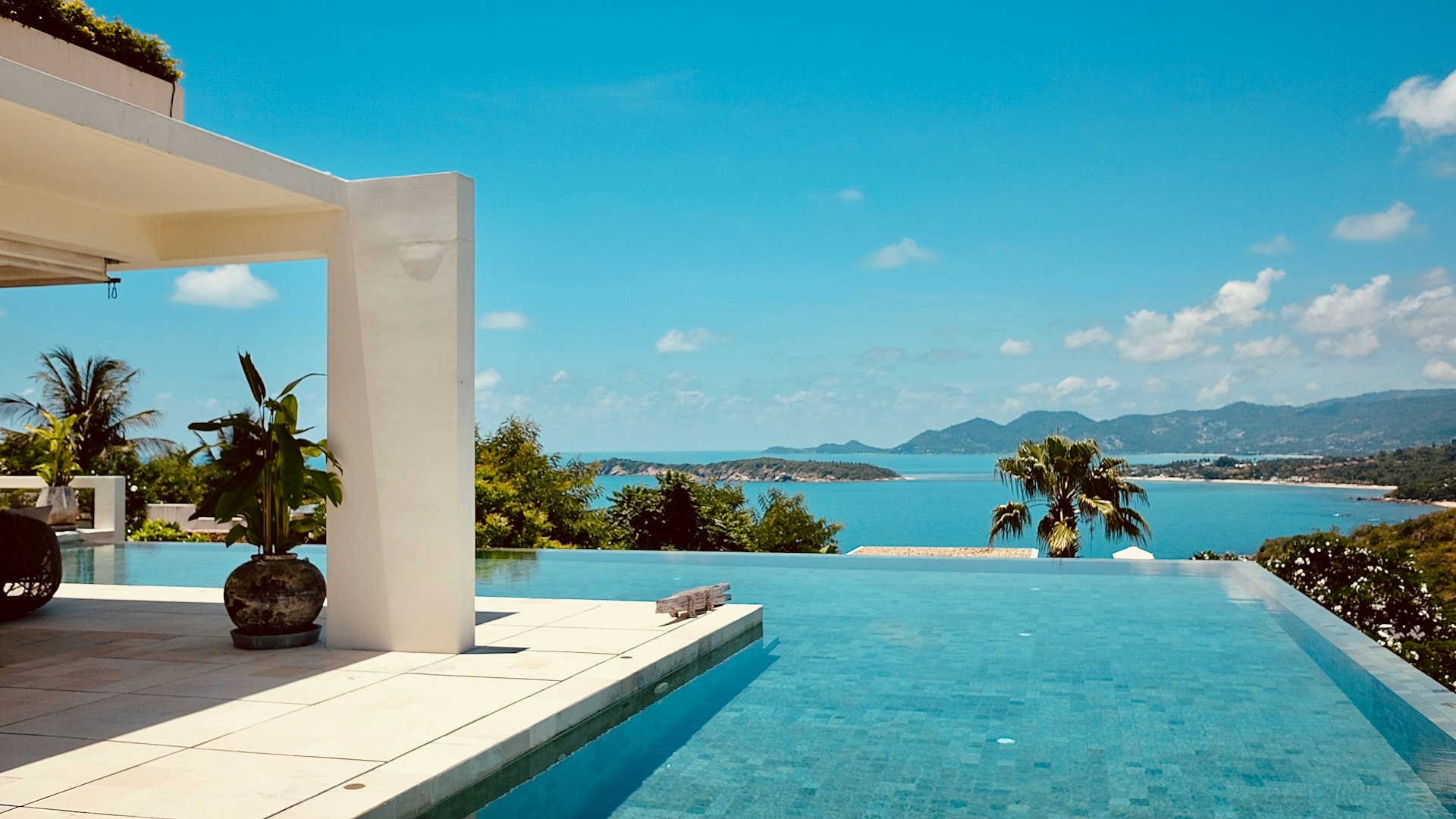
For a group of up to about twenty, we almost always recommend a private estate. You get the whole place: the dining table, the pool deck, the room you turn into a meeting space, and no other guests at breakfast. Conversations carry on between sessions because there is nowhere else to be, and the house staff have learned the group's rhythm by the second day. A villa estate like Samujana, above Choeng Mon, where the larger houses run to six and eight bedrooms, is the kind of place we hold for this.
Before we book a villa for a working trip, we check four things. A shaded room with a door that closes, for the morning sessions. Wifi that holds up under twenty laptops, tested on a video call. Enough bedrooms that nobody senior is sharing. And a kitchen that can feed the whole group three times a day without strain. Plenty of houses look perfect in photographs and fail two of those.
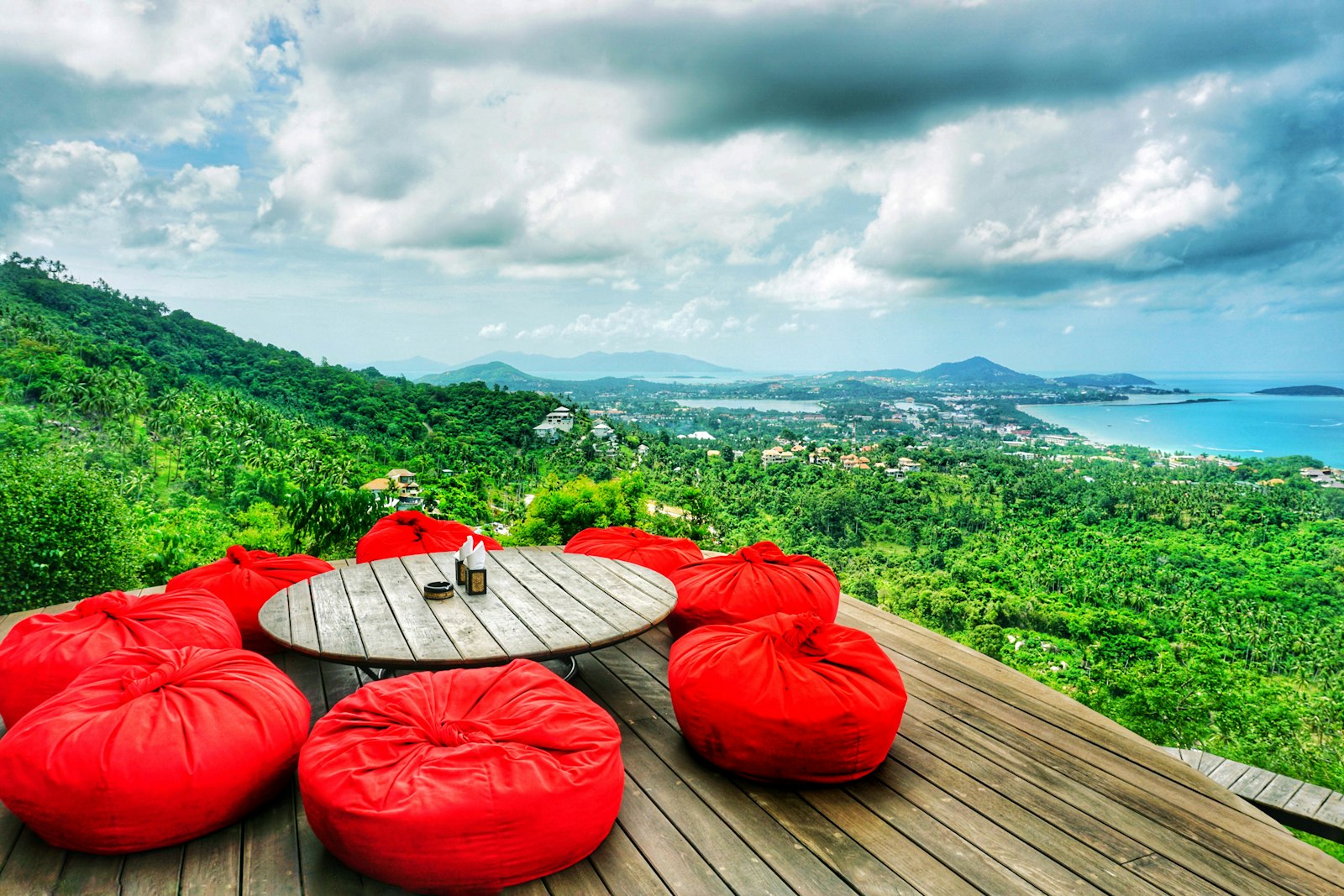
Past twenty-five or thirty people, or when the programme needs a proper conference room with a screen and a stage, a resort is the better fit. The large resorts on the south-west cliffs around Taling Ngam have dedicated meeting spaces and the room count to keep a big team under one roof. We often combine the two: the wider team at a resort, and the leadership group in a villa nearby for a planning day before everyone else arrives.
Getting everyone here
Samui's airport belongs to Bangkok Airways, and its runway was built for short-haul aircraft. That is part of why the island stays calm, and it is the biggest logistics question for any group.
From Bangkok, Bangkok Airways runs the hop to Samui roughly every hour through the day, about sixty-five minutes in the air. The aircraft are small, so twenty people booked late for a peak-season Friday will struggle to get on the same flight. We block seats early and, for larger groups, split the team across two or three consecutive departures, with cars waiting for each one. The house is ready from the first arrival.
There are also direct flights into Samui from Singapore and Hong Kong, which matters for firms with offices in Asia. Hong Kong is about three and a half hours away, and a Singapore team can be at the villa by lunchtime.
Further afield, the route depends on where the office is. From London, the cleanest option is a nonstop to Bangkok and the connection on from there, and our guide to getting to Koh Samui from the UK sets out every route, including the Gulf one-stops that spare a Manchester or Edinburgh team the trip to Heathrow. From Australia, Singapore is the easy connection: one change at Changi and straight into Samui. Teams in Dubai and Doha connect through Bangkok on Emirates or Qatar Airways.
When to hold it
Samui's weather runs on a different clock from most of Thailand. The driest, most reliable stretch is late December to April, and February to April brings the flattest sea of the year. For a retreat with a boat day on the programme, those are the safest months.
The wet weeks are October and November, with November the heaviest, and Ang Thong marine park usually closes from 1 November to around mid December. We steer corporate groups away from that window. The month-by-month detail is in our guide to the best time to visit Koh Samui.
A few calendar points for whoever is holding the dates. A UK company's winter offsite lands in Samui's dry season, which makes January to March an easy case to put to a team in London. A Gulf firm escaping its summer will find July and August here in the island's mild green season, around thirty-one degrees with a fraction of the rain that falls on Phuket. And for the best houses at the lowest rates, September is the month we rate most, for the reasons in Koh Samui in September.
Book early. Christmas and New Year sell out a year ahead, and the large estates for February and March are often committed by the autumn before. For a group, six months is comfortable, and three can work outside peak season.
A four-day shape that works
Every brief is different, but the retreats that go well tend to follow the same outline.
Day one is arrival. Flights land through the afternoon, the house is ready, and the evening is a relaxed dinner at the villa with no agenda. People have travelled a long way, and the first night sets the tone for the rest of the trip.
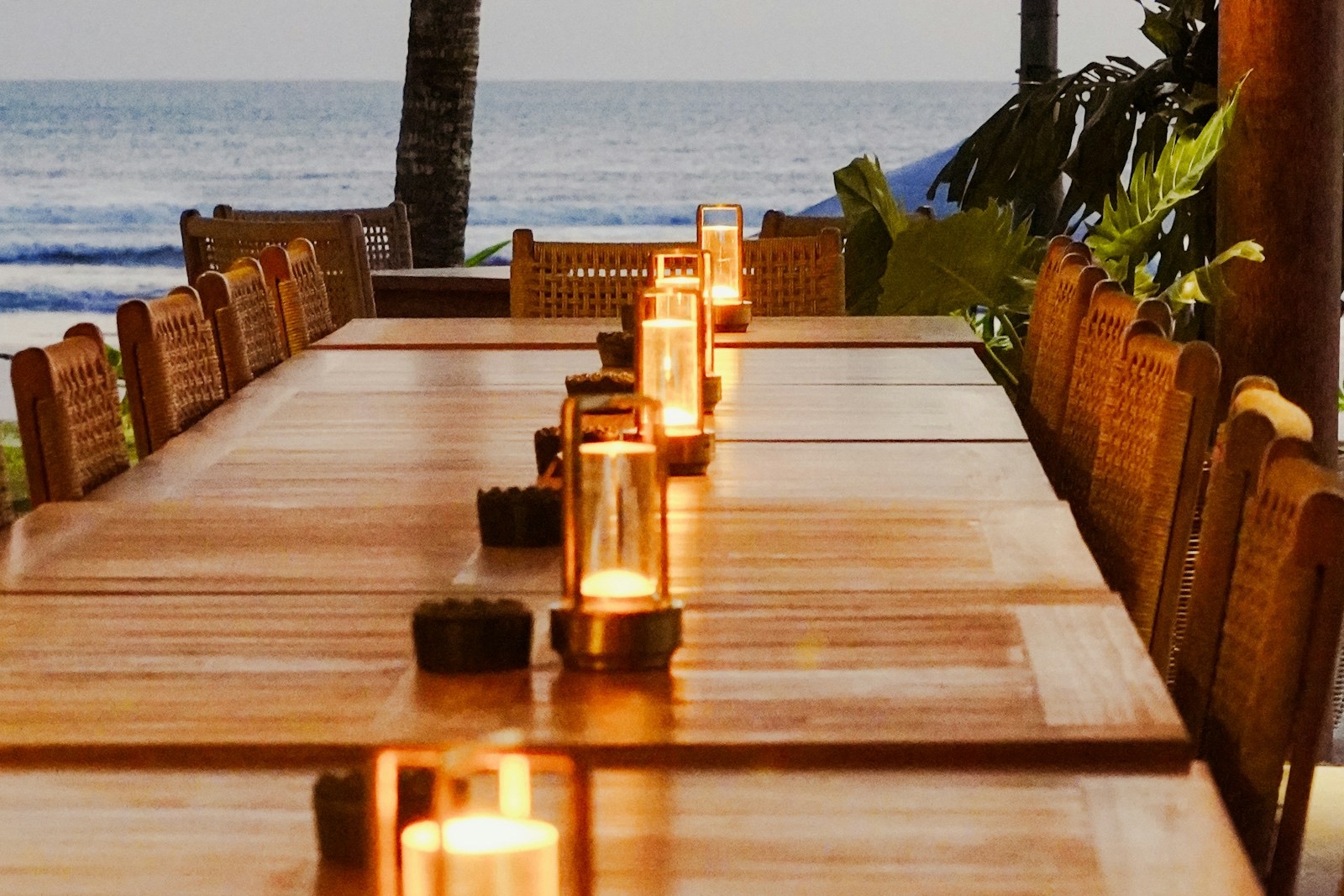
Day two is the main working day. Sessions run in the morning, while it is cooler, and finish by lunch. The afternoon is free: the pool, a massage, a sleep. In the evening we bring in a private chef and set one long table on the terrace.
Day three is the one people talk about afterwards. A private boat into Ang Thong, leaving early to stay ahead of the tour fleet, with lunch on board and a swim in a quiet bay. The way we run that day is in our guide to Ang Thong by private yacht. For a group that would sooner stay closer to home, the north coast of Koh Phangan is thirty minutes across the water, and the day we plan there fits neatly into a retreat.
Day four is a short closing session over breakfast, then departures staggered to match the flights. Anyone staying on for the weekend moves to a smaller house, which we arrange at the same time as everything else.
Two habits protect this shape. Keep the working sessions to mornings, and leave at least one afternoon with nothing in it. An agenda that fills every hour sends people home tired, and the best conversations on these trips usually happen by the pool at four o'clock.
What it looks like from your side
One brief, one contact, one invoice. We hold the house, block the flights, meet every arrival and run the days: cars, boats, chefs, meeting kit, the dietary list and the rooming plan that changes three times before anyone lands. If wellness is part of the programme, such as yoga at sunrise or massages by the pool, our practitioners come to the villa, the same way they do for a private wellness retreat.
Incentive trips need one extra step. The trip has to look like a prize months before anyone wins it, so we supply the pictures and the itinerary for the announcement, then deliver the week exactly as promised. The full range is on our Corporate House page, and everything else we arrange on the island sits under the Houses.
If you are holding a brief for next year, send us the rough numbers and the months you have in mind. We will come back with the house, the flights and a first draft of the days.
Corporate retreats on Samui: the questions we get
- Is Koh Samui a good place for a corporate retreat?
Yes, for groups of around ten to forty. The airport is a few minutes from the main coast, the island has a deep stock of large staffed villas, and there is plenty to fill the time between sessions: boat days in Ang Thong marine park, Koh Phangan, spas and private chefs. Groups much larger than thirty are usually better served by a resort with dedicated meeting rooms.
- When is the best time for a corporate retreat in Koh Samui?
Late December to April is the driest and most reliable window, and February to April has the calmest sea for boat days. We avoid October and November, the wet season, when Ang Thong marine park also usually closes from 1 November to around mid December. September is the best value, with good weather and lower villa rates.
- How do you fly a group of people to Koh Samui?
Most groups connect through Bangkok, where Bangkok Airways flies to Samui roughly every hour and the flight takes about sixty-five minutes. There are also direct flights from Singapore and Hong Kong. The aircraft are small, so for groups we block seats early and often split the team across two or three consecutive flights, with cars meeting each arrival.
- How far ahead should we book a company retreat in Koh Samui?
Six months is comfortable for a group, and three can work outside peak season. For Christmas and New Year, start a year ahead. For February and March, the large villa estates are often committed by the autumn before, so a spring retreat is best booked the previous summer.